

A Quick Look at the Universal Joint Spider
Ever wonder what keeps power flowing smoothly between a car’s drive shafts? Meet the Universal Joint Spider—a small but mighty piece that’s a big deal in both automotive and machinery worlds. Built with care and precision, this little champ stands up to tough conditions, delivering reliability you can count on.
What’s This Thing All About?
Our Universal Joint Spider is made from tough stuff like 20Cr or 20CrMnTi—fancy names for high-quality materials we tweak to fit what you need. It comes in all sorts of sizes, ready to roll with cars, trucks, tractors, you name it. Basically, if it moves and needs power, this spider’s got its back.
| Name | Universal Joint Spider / Universal Joint Cross |
| Material | 20Cr / 20CrMnTi / Whatever You Need, We’ll Make It Work |
| Size | Lots of Options—Cars, Trucks, Tractors, and More |
| Application | Auto Parts, Trucks, Tractors—You Get the Idea |
| Model | Standard Sizes or Custom Jobs, Your Call |
How We Pack It Up
We don’t mess around when it comes to shipping these babies. They arrive at your door looking as good as they did leaving ours. Here’s how we roll:
- Each piece gets a bubble bag and a color box, then stacks into cartons, all snug in a sturdy plywood case or pallet.
- Carton box teamed up with a solid plywood case or pallet—simple and safe.
- Bubble bag per spider, straight into a plywood case for export.
- Or just packed tight in an export plywood case, no fuss.
These options are built for the long haul—literally. Got a special packing idea? Let us know, we’re game.
Your Questions, Answered
1. Are you making these or just selling them?
We’re the ones making them—universal joint pros right here. We team up with some trusted pals for extras like plating, but the core work’s all us.
2. What’s it made of?
Mostly alloy steel, tough as nails. But if you’ve got something else in mind, we’ll whip it up custom for you.
3. Can you build it from my sketch?
You bet! Hand us your 2D or 3D drawings, and we’re on it. A 3D model? Even better—speeds things up big time.
4. How quick can I get a sample?
Give us about a month, and we’ll have the mold and sample ready to roll.
5. How do you keep the quality tight?
We’re all over it—checking sizes, testing materials, stressing the mechanics, and even doing non-destructive tests. Only the best makes it out the door.
More Cool Stuff We’ve Got
The Universal Joint Spider’s just the start. We’ve got a whole lineup—agricultural gearboxes, power shafts, sprockets, hydraulic couplings, worm gear reducers, racks, roller chains, pulleys, planetary gearboxes, you name it. Quality’s our thing, prices are fair, and we’ve got your back with top-notch service. Want something custom? Bring your drawings or samples, and we’ll make it happen.
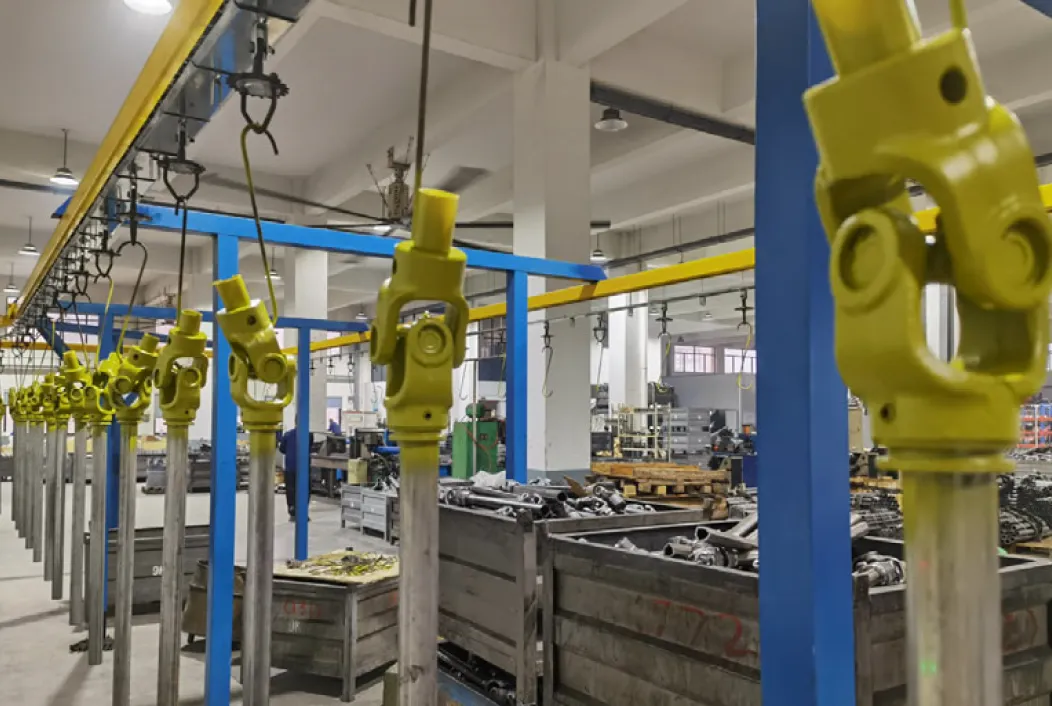
What Makes Universal Joints Tick
Universal joints—or U-joints, if you’re feeling casual—are the unsung heroes of machines. They shuffle torque and power between shafts that don’t quite line up, keeping things moving. Here’s what they’re packing:
- Bend It Like a Pro: They handle angles like champs, perfect for when parts aren’t playing nice and straight.
- Heavy Duty: Big torque? No problem—they’re built to take it without breaking a sweat.
- Built to Last: High-grade materials mean they stick around, even when the going gets rough.
- Smooth Moves: Low friction keeps them cool and efficient—less heat, more hustle.
- Jack of All Trades: Tons of sizes and styles mean they fit just about anywhere.
The Different Flavors of Universal Joints
Not all U-joints are the same—here’s the rundown:
- Cross and Bearing: Classic setup with a cross pivot and bearings—flexible and strong.
- Double Cardan: Two joints in one, tackling bigger angles and keeping vibes low.
- Rigid vs. Flexible: Rigid holds steady under pressure; flexible bends where it’s needed.
Materials matter too—steel’s the king of strength, while composites lighten the load and fend off rust.
Where You’ll Find Universal Joints
These guys pop up everywhere:
- Cars: Drive shafts rely on them to get power to the wheels, even with suspension bouncing around.
- Factories: Conveyor belts, pumps—they keep the gears turning, no matter the setup.
- Farms: Tractors and harvesters power through bumpy fields with U-joints on duty.
- Planes: Control systems and engines trust them to handle tricky conditions.
- Boats: They link the engine to the propeller, bending with the waves.

What’s Next for Universal Joints
The future’s looking sharp:
- Smart Tech: Sensors could track how they’re holding up, making upkeep a breeze.
- Lightweight Vibes: New composites mean less weight, same grit—big wins for cars and planes.
- Tougher Than Ever: Research is pushing for joints that last longer and laugh at wear.
With industries shifting gears, U-joints are set to shine brighter than ever.
Picking the Right Universal Joint
Don’t just grab one—here’s what to think about:
- Load Limit: Know what it’s gotta carry so it doesn’t buckle.
- Torque Talk: Match it to the power you’re pushing.
- Speed Check: Fast spins need low friction to stay cool.
- Angle Game: Figure out how much bend you’re dealing with.
- Material Match: Pick something that stands up to your environment.
- Weather or Not: Chemicals, heat, wet—choose a joint that can take it.
Wrapping It Up
Universal joints are the glue holding tons of machines together—flexible, tough, and ready for action. Knowing their quirks, types, and where they shine helps you pick the perfect one. With tech and materials on the move, these little powerhouses are only getting better.
Quick note: This info’s scraped from the web—use it as a guide, not the final word. Our parts are aftermarket replacements, not OEM. We don’t hold the original trademarks, but our stuff fits like it was born for it. Want the real deal? Reach out to the original maker or supplier.
Author: Dream